Garage Door Opener Repair
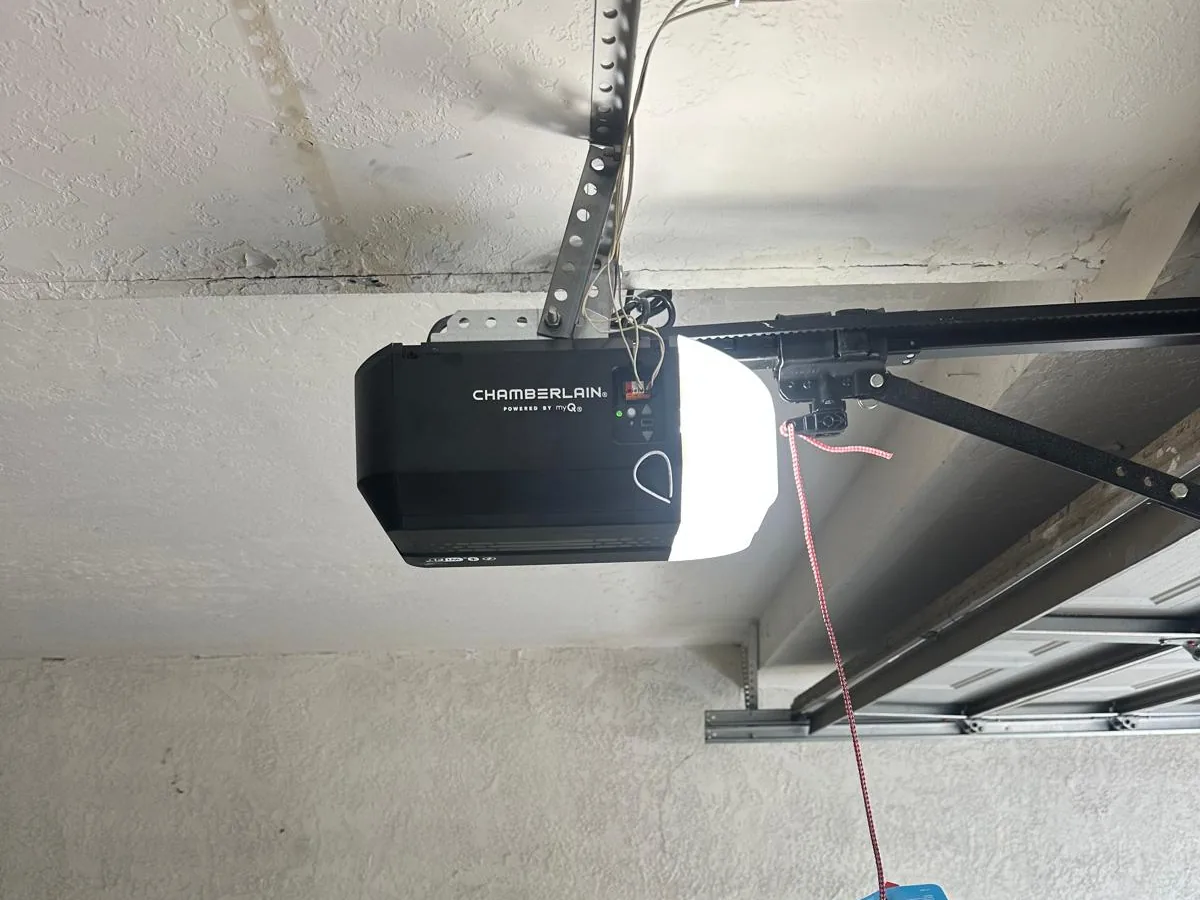
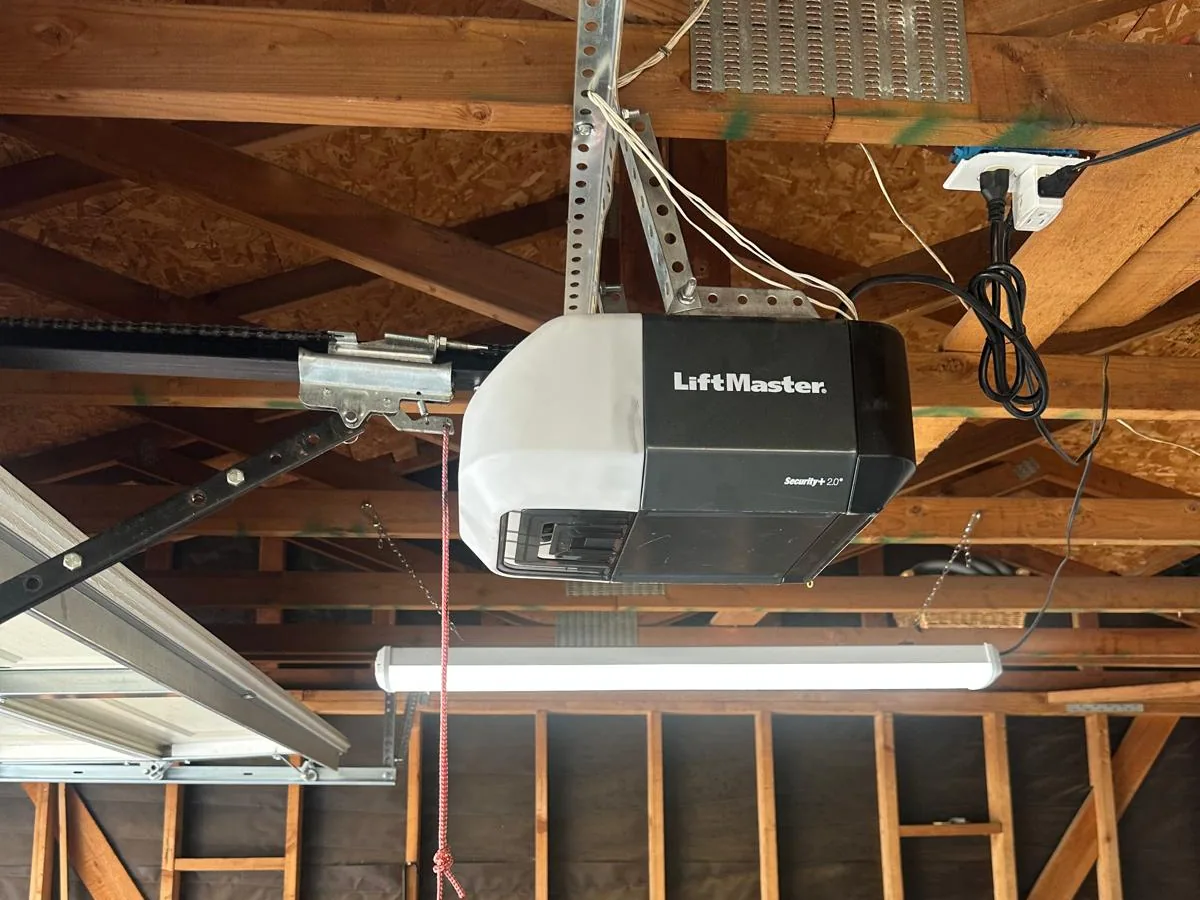
Sensors, stripped gears, logic boards, remotes and myQ on LiftMaster, Chamberlain, Genie and Linear.
Read more
Heard a bang from the garage and now the door won't lift? A spring broke. We replace torsion and extension springs, matched to your door's weight, in Kapolei, Ewa Beach, Makakilo and Waipahu.
Springs rarely fail quietly. Look at the shaft above the door or the tracks on each side, and match what you see.
That's the sound of a wound torsion spring letting go. It often happens with the door closed, when the spring is under the most tension.
A broken torsion spring shows a clear gap between two halves on the shaft. You can usually spot it from the floor.
With the spring gone, you'd be lifting the whole door by hand. Don't. That weight is what the spring was built to carry.
The opener's force setting trips because the door is suddenly far too heavy. Pressing again only wears its gear.
On older doors with extension springs along the tracks, one sagging or hanging loose means it snapped or lost its pull.
Loose cables hanging off the drums are a side effect of the lost tension. They need reseating when the spring goes in.
A spring is sized to the door, not grabbed off a shelf. We measure the wire, inside diameter and length of the old one, weigh what the door actually needs, and wind it until the door holds still halfway up.
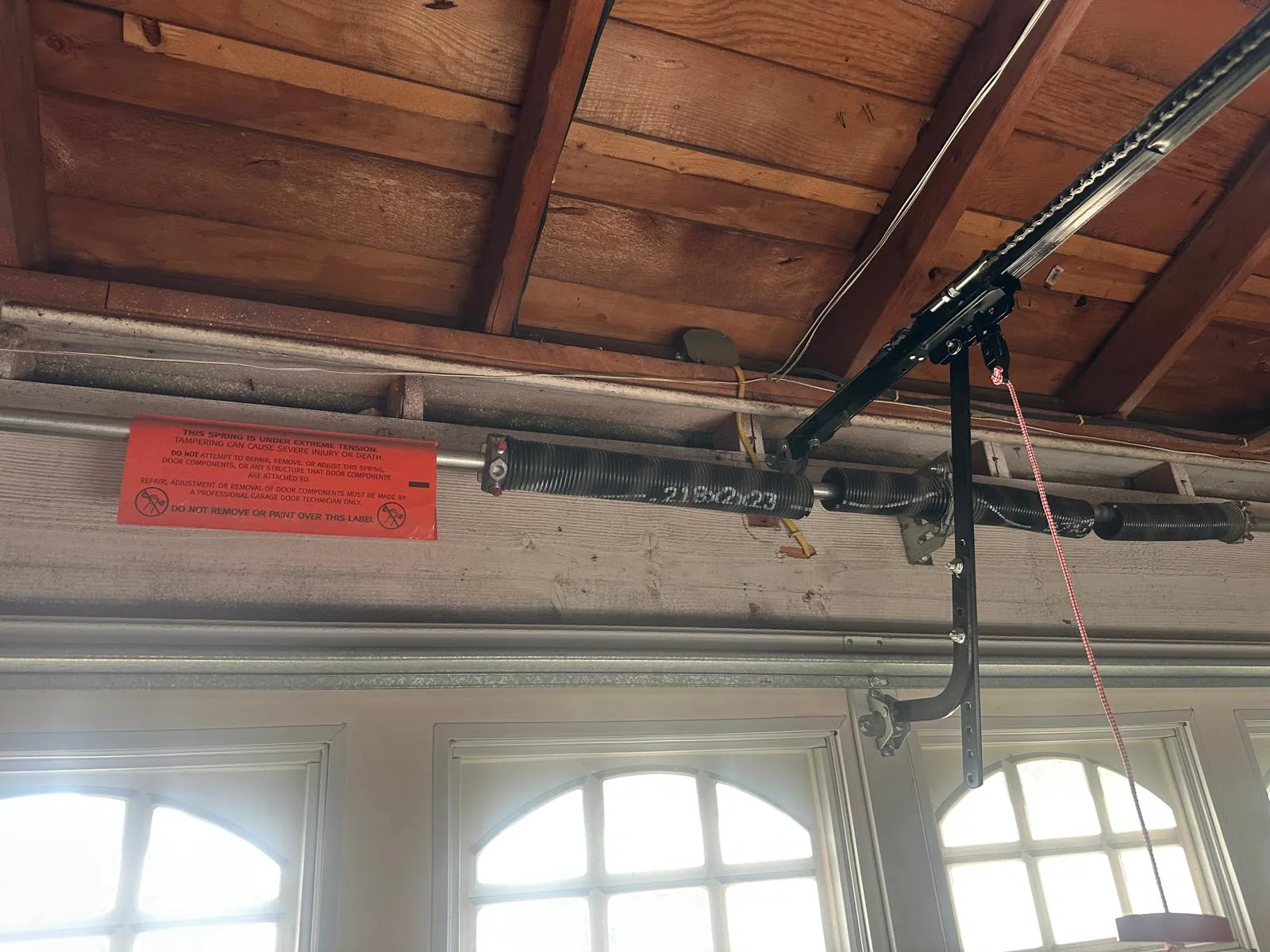
Three spring systems cover nearly every residential door. The one on yours decides the parts and how the job goes.
| System | Where it sits | How it works | When it breaks | What to know |
|---|---|---|---|---|
| Torsion spring | On a steel shaft above the door opening | Twists as the door closes, then unwinds to lift it through cable drums | Splits in two with a loud bang, door stays down | The current standard. One spring on lighter doors, two on heavier or wider ones |
| Extension spring | Along the horizontal tracks on each side | Stretches as the door closes, pulling through pulleys and cables | Can throw metal if no safety cable runs through it | Found on older homes. Always used in pairs, each with a containment cable |
| Enclosed (TorqueMaster) | Inside the steel tube above the door | A torsion spring hidden in the tube, wound from the end bracket | The door suddenly won't lift, nothing visible | Wayne Dalton design. Its parts don't swap with standard torsion springs |
They run out of cycles, and salt shortens the count. Most standard residential springs are rated around 10,000 cycles, one open plus one close. A household that drives in and out twice a day uses about 730 a year, so the original springs last roughly 13 years. Use the garage as your front door and it's half that. With the median Kapolei home built in 2006, plenty of first springs are due now. Near Ko Olina and the Ewa shoreline, sea air rusts bare oil-tempered wire, and rust breaks start on the outer surface. Coated or galvanized springs resist it longer. Clopay and Wayne Dalton warranties exclude salt-spray damage.
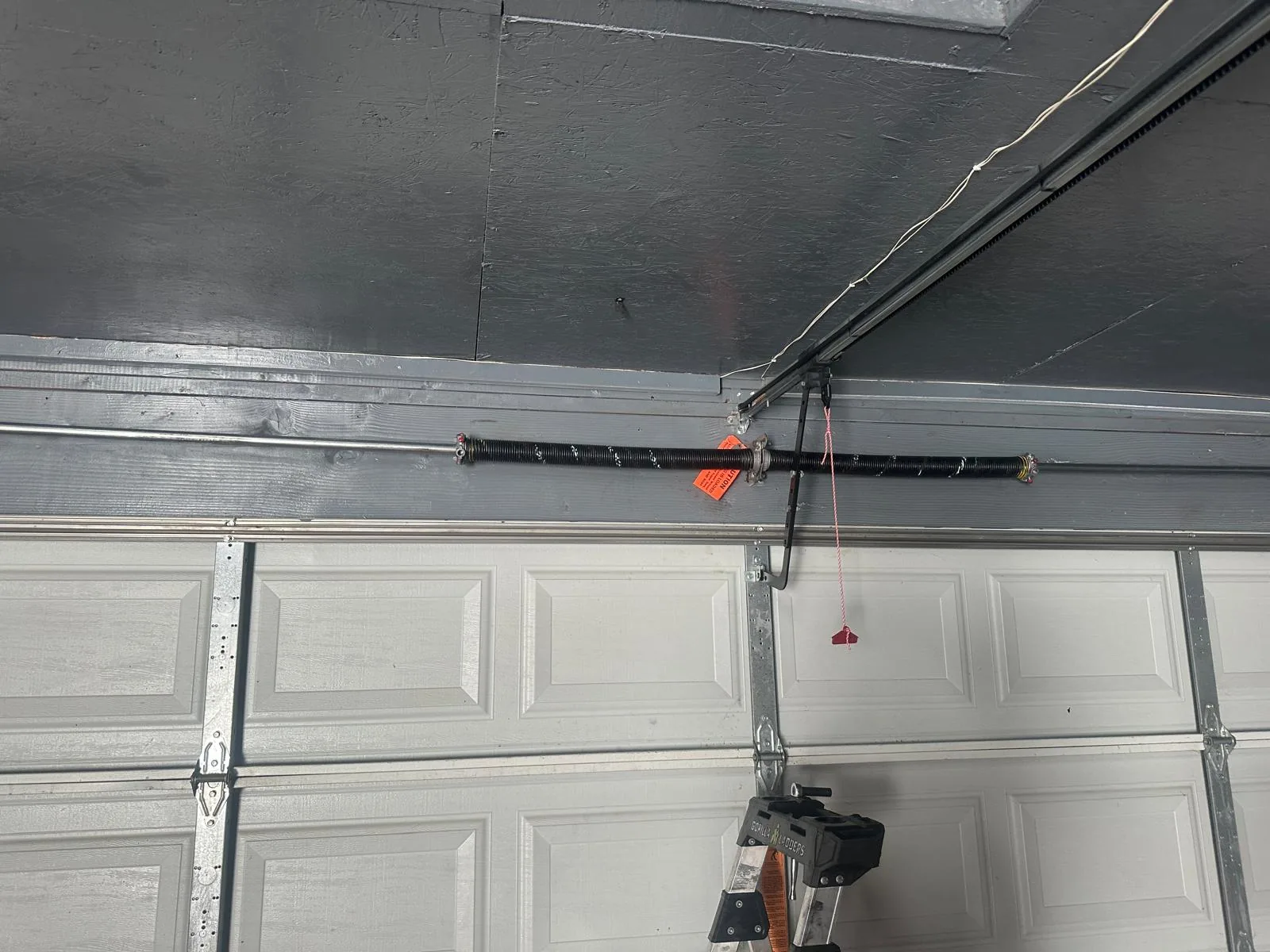
Tell us what happened and whether a car needs to get out. A photo of the shaft above the door helps us bring the right wire size.
We check the door's weight and height, the old spring, and the cables, drums and bearings. Then a written price, before any winding.
Old springs off, new ones on, wound to the turn count the door needs. Cables are reseated evenly on both drums.
Opener off, the door is lifted halfway and released. It should stay. Then a full cycle with the opener and a reversal test.
A worn spring often has company: a strained opener, frayed cables, tired rollers. Here's what else we take care of.
Sensors, stripped gears, logic boards, remotes and myQ on LiftMaster, Chamberlain, Genie and Linear.
Read moreTorsion and extension springs replaced and the door rebalanced so the opener stops straining.
Read moreNew steel, aluminum and insulated doors sized to the opening, with the wind rating checked.
Read moreDoor stuck open, car trapped inside, spring snapped. Call between 7am and 10pm.
Read moreRoll-up, sectional and rolling steel doors for warehouses, shops and business parks.
Read more